Architectural rendering in Dubai: bringing ambitious projects to life

Dubai’s skyline is world-famous for its futuristic skyscrapers, man-made islands, and luxury villas – and many of these ambitious projects have sold out before ever breaking ground, thanks to the power of architectural rendering. In a city where real estate is booming and global investors flock to buy properties remotely, high-quality 3D visualizations have become indispensable. This blog post is a practical guide for U.S.-based developers, architects, and investors interested in architectural rendering services for projects in Dubai.

We’ll explore why Dubai is a unique market for architectural visualization, how these services help international stakeholders visualize and promote real estate, the types of renderings available (interior, exterior, animation, drone integration), and key insights to ensure your project stands out. Let’s dive in!
Dubai: a unique and booming market for architectural rendering
Dubai has rapidly transformed from a desert outpost into a global real estate powerhouse. The city now attracts enormous foreign investment, fueled by policies like freehold property laws and “Golden Visa” residency incentives that encourage international buyers. In fact, 40% of Dubai’s real estate buyers each year are from overseas, including a growing number of U.S. investors (Sotheby’s reports a 20% increase in U.S.-based clients over the past decade). These buyers are drawn by Dubai’s tax-free rental income, ultra-modern infrastructure, and iconic developments.
Crucially, Dubai’s property market is highly competitive and moves fast. Developers often begin selling units 2–3 years before construction is complete, relying on renderings and virtual tours as the primary way to sell a vision rather than a finished building. As one industry guide put it, “a building doesn’t have to exist to sell out – it just has to look good” in Dubai. This means that architecture and CGI visualization are not afterthoughts, but key drivers of sales and investment.
Another factor is Dubai’s “wow” architecture: the city boasts more record-breaking “tallest” and “most luxurious” projects per square mile than anywhere else. From the Burj Khalifa to cutting-edge artificial islands, designs are ambitious and futuristic. This creates fierce competition to catch buyers’ attention.
Visual marketing needs to cut through the noise – simply having a pretty image isn’t enough. Effective renderings must tell a compelling story about lifestyle and luxury that is unique to Dubai. In short, Dubai is a high-stakes arena for architectural rendering, where top-quality visuals can directly influence property values and buyer decisions.
How 3D renderings help visualize and sell Dubai projects
For international developers and clients, 3D architectural renderings are the bridge between an idea and reality. They allow everyone to see and experience a project long before it’s built. Here are some practical ways these visualizations help various stakeholders:
Appealing to global buyers: High-end renderings and animations let overseas investors virtually step inside a Dubai property from thousands of miles away. One buyer noted that a 40-second 3D walkthrough – showing sunlight flooding a living room – convinced him to choose one Dubai apartment over another, even though he was in Europe and never set foot on-site. He could walk through the space, see views from the balcony, compare finishes, and feel the ambiance – all through a screen. More and more buyers now expect this level of immersion. They “want movement, mood, life” in presentations, not just flat blueprints. In fact, listings with 3D visuals generate up to 2.5× more inquiries than those with static images, and well-executed 3D storytelling has enabled some developments to sell 80–90% of units off-plan. The takeaway: renderings build trust and excitement remotely, making someone feel “they’re standing on a high-rise balcony overlooking the Persian Gulf” instead of just reading an info sheet.
Communicating the vision clearly: 3D renderings serve as a common language between architects, developers, and non-technical stakeholders. High-quality visuals keep everyone on the same page about the design. It’s much easier for a client or investor to understand a photorealistic image than a CAD drawing. Renderings show accurate textures, lighting, and materials in context, which reduces misinterpretation. This clarity simplifies complex design details and helps investors grasp the project without getting lost in technical plans. The result is faster buy-in and fewer “I didn’t visualize it that way” surprises down the road.
Faster approvals & fewer revisions: In Dubai’s fast-paced market, time is money. 3D visualizations speed up the approval process by revealing potential issues early and aligning stakeholders around a shared vision. It’s far cheaper and easier to tweak a digital model than to redo construction. Catching design conflicts or refining aesthetics in the rendering phase can avoid costly mistakes during construction. Developers report that using detailed renderings and VR walkthroughs can cut project approval times significantly by resolving questions up front. One study found revisions in 3D are 50% faster than traditional methods, reducing delays and change orders. In short, better visuals mean a smoother process and a better final product.
Powerful marketing & storytelling: In a city where properties vie for global attention, architectural renderings are a core part of real estate marketing. They do more than show a building – they sell a lifestyle. A cinematic fly-through animation or a series of atmospheric dusk renderings can evoke an emotional response that plain brochures can’t. Visual storytelling creates buzz and desire, helping a project stand out as something truly special in Dubai’s luxury market. Renderings also allow developers to highlight premium features (like an infinity pool or a skyline view) in the best light – literally using optimal lighting and context to enhance perceived value. Studies indicate that including night or sunset views in Dubai project marketing can increase buyer conversions by 22–35% compared to only daytime images. And beyond sales, these visuals are useful for community presentations and even design competitions, demonstrating the project’s vision in a vivid way. In essence, a great rendering is your 24/7 sales pitch, engaging viewers on websites, social media, and showrooms around the world.
Pre-construction sales & investor confidence: Because so many Dubai developments are sold off-plan (before completion), renderings are often the only tangible thing a buyer or investor can evaluate. They aren’t just seeing a building, they are imagining their future life or investment returns in it. By showcasing realistic environments – e.g. showing a bustling streetscape, or how the light falls in a penthouse at sunset – 3D visuals help buyers picture themselves there. This builds the confidence needed to commit financially without a physical property to tour. For institutional investors, high-quality renderings and animations signal that a development team is competent and forward-thinking. (As one report noted, even major funds now include the quality of CGI marketing in their due diligence, because “if the visuals are generic and low-effort, it can raise doubts about the project”.) On the flip side, impressive, context-rich visuals convey credibility – they show that the developer knows how to communicate vision and thus is likely to deliver a desirable, “liquid” asset. In a way, a polished rendering package becomes a visual business plan, answering the key question: Who will want this property and why?. By tailoring imagery to target demographics (e.g. a family-friendly vibe versus ultra-opulent luxury), renderings can even help fine-tune marketing strategy and pricing. All of this contributes to faster pre-sales, stronger investor interest, and potentially higher property values.
In summary, architectural rendering is far more than making pretty pictures. It’s a practical tool that drives communication, decision-making, and sales in Dubai’s real estate scene. As one industry expert succinctly put it, “People don’t buy layouts – they buy emotion. In today’s real estate world, the decision isn’t made on site; it’s made on screen.” By leveraging top-notch 3D visualization, you’re giving your Dubai project the best chance to succeed in a global arena.

Types of rendering services for Dubai projects
Architectural rendering is a broad field, and Dubai developers typically use several types of visualization services to cover all angles. Here are the main categories and how they apply to projects in this market:
Exterior renderings: These are high-resolution images of a building’s exterior, showing the façade, shape, and how the project fits into its surroundings. In Dubai, exterior renderings often depict skyscrapers against the city skyline or villas in lush landscaping, capturing the “wow factor” of the architecture. A good exterior CGI will include realistic lighting (for example, the golden sunset reflecting off glass towers), accurate shadows, and contextual details like neighboring buildings or streets. Use exterior renderings for marketing brochures, investor presentations, and regulatory approvals – they answer the question “what will this look like on the outside?” with photoreal clarity. At Transparent House, our exterior rendering services bring designs to life with true-to-reality detail, from the building materials down to the skyline backdrop.
Interior renderings: Interior 3D renderings portray the inside of a space, including floor layouts, furniture, materials, and lighting ambiance. These are crucial for showing luxury apartments, hotel suites, offices, or retail interiors in Dubai’s upscale developments. An interior render helps viewers feel the space – seeing how daylight will illuminate a living room, or how spacious a lobby will be with its intended décor. For clients and designers, interiors are useful to verify design choices (colors, finishes, lighting) and for marketing, they highlight the lifestyle (e.g. a cozy bedroom with a view of the city). In Dubai, where buyers expect high-end finishes, interior visuals can showcase quality – marble floors, elegant lighting fixtures, panoramic windows, etc. We offer interior rendering services that emphasize these details, helping stakeholders envision exactly how a finished space will look and feel.
3D animations & walkthroughs: Sometimes a still image isn’t enough – this is where animated renderings come in. A 3D architectural animation is essentially a short movie or walkthrough of the project. It might fly over a new master-plan community, then walk you through the lobby into a unit, and end on a rooftop view. These videos are extremely effective for sales galleries, websites, and investor pitches, because they provide a guided tour of the unbuilt project. Animations can show the play of light and shadow over time, moving people and vehicles, and transitions from day to night, adding mood and realism. Developers in Dubai use animations to differentiate premium projects – for instance, highlighting a tower’s amenities floor by floor, or dramatizing an iconic design with cinematic flair. They are also useful for government or competition presentations, to communicate the design concept in a compelling way. While animations require more time and budget, the payoff is high engagement – one might think of it as “Hollywood trailer meets real estate”. Transparent House produces architectural animations and walkthroughs that help communicate the full narrative of your project, far beyond what static images can do.
Aerial & drone integration (photo-video montages): Aerial renderings provide a bird’s-eye view of a project, which is particularly valuable in a city like Dubai where location and context are everything. For example, an aerial rendering can show a new resort on the Palm Jumeirah in the context of the island and the Dubai Marina skyline in the distance. Going a step further, drone integration (also called architectural photo or video montages) merges real-life drone footage or photography with CGI elements. Imagine you have drone video sweeping over a construction site – we can insert a 3D model of the planned building into that footage, so investors see the actual surroundings with the future project in place. This technique creates hyper-realistic previews of how a development will sit in the existing cityscape. For Dubai, drone/photomontage renderings are perfect for conveying the view from a tower, the proximity to landmarks (like showing your building against the Burj Khalifa or waterfront), or the scale of a project in its neighborhood. They are often used in marketing for large master plans or any project where location is a selling point. Our team at Transparent House specializes in such architectural photo & video montage services, combining actual site imagery with high-quality CGI – so viewers truly get the best of both worlds (reality and vision in one).
360° virtual tours and VR experiences: Although not explicitly in our top four list, it’s worth mentioning that interactive virtual tours are increasingly popular in Dubai’s real estate scene. A 360° tour lets a user click around a panorama of each room or vantage point, and even use VR headsets for an immersive experience. This is great for remote buyers – a client in New York can put on a VR headset and virtually stand inside their future Dubai office or condo. These tours can be created from the same 3D models used for renderings. If your goal is to offer a hands-on exploration of the space (for example, at a property launch event or online), consider investing in a virtual tour. It adds a “wow” factor and further builds that emotional connection through interactivity.
Each type of rendering service serves a different purpose, and often they are used together. For instance, a luxury villa development might use exterior images for billboards, interior renders for a brochure, an animation on the website, and a drone-integrated video for investor meetings. By leveraging the right mix, you’ll provide a comprehensive visual package that covers every angle a buyer or stakeholder cares about.
Tip: If you’re unsure which visualization tools you need, our Transparent House team is happy to consult. We offer end-to-end 3D architectural visualization services, from still renderings to VR, tailored to your project’s needs.
Showcasing vision: Transparent House’s expertise and experience
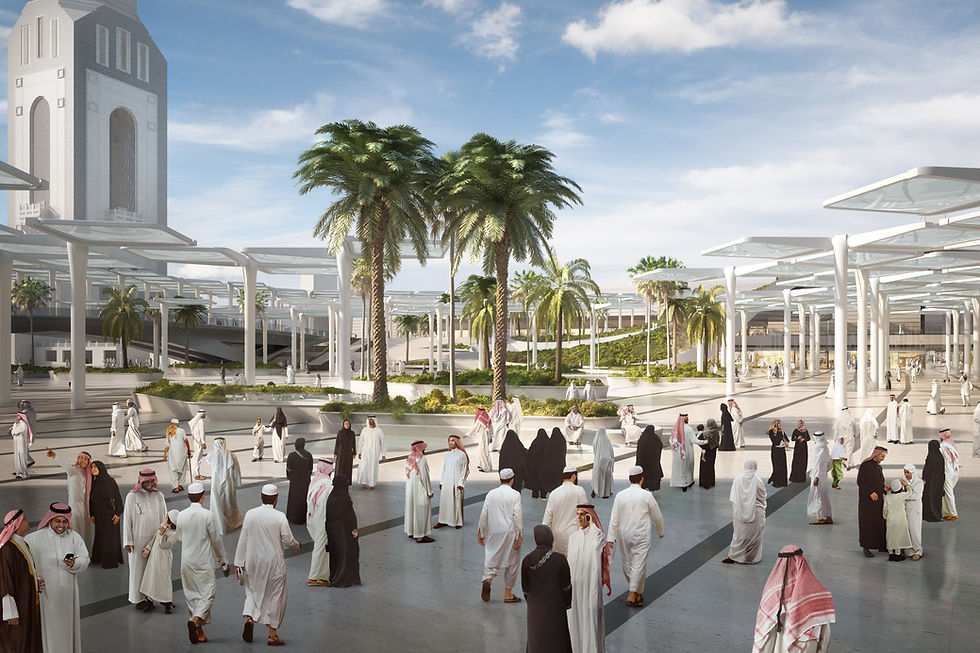
As a U.S.-based studio with global reach, Transparent House understands both the expectations of American clients and the unique flavor of Dubai’s real estate market. We have experience bringing Middle Eastern projects to life – for example, we partnered with Perkins + Will on concept imagery for a cutting-edge transit station in Dubai, creating visuals that highlighted the design’s innovation and context. Whether you’re a U.S. architect planning a Dubai high-rise or a Gulf developer seeking world-class CGI, we’re here as an extension of your team.
What makes our approach stand out? First, we emphasize clear communication and collaboration. We’ll start by discussing your vision in depth – the story behind the project and the audience you want to impress. Then our artists get to work, using the latest rendering software and techniques to produce photorealistic images and animations with true attention to detail. We simulate real-world Dubai sunlight, correct scale and proportions, and even incorporate local context (skyline, streetscape, vegetation) to ensure the renderings feel authentic to the location. If you have reference inspirations or specific materials/finishes in mind, we integrate those as well, so the result aligns with your design intent.
Transparent House also knows the importance of deadlines and revisions. We’re used to fast-track marketing schedules and coordination across time zones. Our process typically includes multiple review rounds – we share draft views for feedback, make refinements, and ensure the final deliverables meet your expectations. (Need last-minute changes to match an updated floor plan or a new furniture layout? No problem – we understand that projects evolve, and we build in flexibility.) Our goal is to make the rendering process smooth and transparent – pun intended! – so you can focus on the bigger picture while we handle the visuals.
Finally, we are passionate about storytelling through design. We don’t just hand you a generic render; we strive to capture what makes your project special. Maybe it’s the innovative sustainable design of your building, or the luxury lifestyle it offers – whatever the key message, we craft the visuals to highlight that narrative. By doing so, we help your marketing speak to buyers on an emotional level, which is the key to success in Dubai’s market (or anywhere, for that matter). As mentioned earlier, selling real estate is about selling a vision, and our job is to make that vision shine.
If you’d like to see examples of our work or discuss an upcoming project, feel free to check out our services and portfolio pages, or contact us for a friendly chat. We’re always excited to take on new challenges and turn architectural ideas into visual reality.

Frequently asked questions
How long does it take to create a 3D rendering or animation?
It depends on the scope and complexity. For a single high-quality still image, our typical turnaround is about 3–7 working days once we have all the project info (e.g. 3D models or CAD plans, design details) – simpler scenes on the shorter end, more complex ones on the longer end. Animations or multiple images (like a set of interior and exterior views) will naturally take longer – often a few weeks for a polished 30-second animation, as it involves many frames and more processing time. We always discuss timelines with you upfront. If you have a hard deadline (for a presentation or launch), let us know and we will do our best to meet it. Speed is important, but we’ll never compromise quality – the goal is to deliver stunning visuals on time.
What file formats or deliverables will I receive?
For still renderings, we usually deliver high-resolution image files such as JPEG or PNG (suitable for print and web use). If you need extremely large formats (for example, a billboard or large banner), we can provide TIFF or other formats as required. For animations, we can provide the video in common formats like MP4 or MOV at the resolution you need (HD, 4K, etc.). We can also supply 360° panorama files for virtual tours (typically in HTML5 or platform-specific formats if you’re using a particular VR tour software). If you have specific format needs, just let us know in advance – we’re flexible and can accommodate most standard file types. Along with the files, we’ll also guide you on how to use them (for instance, best practices for uploading a 360° tour to a website, or playing a video on various devices).
How do we get started with a rendering project?
Getting started is easy. First, reach out to us via our contact page or email/phone – we’ll discuss your project briefly and figure out the best next steps. Typically, we’ll ask you to share any relevant materials: architectural drawings or models (CAD plans, SketchUp, Revit files, etc.), design references or mood boards (if you have a certain style in mind), and details like the project timeline and number of views needed. Don’t worry if you’re not sure what you need yet – we can advise on the types of renderings that would benefit your project most. After we review your info, we’ll provide a proposal/quote outlining the scope, timeline, and cost. Once we all agree and kick off, our team will start with the 3D modeling (if needed) and then move into draft renderings for your feedback. Throughout the process, we maintain communication – you’ll know what we’re working on and can give input at key stages. In summary: Contact us, send any project files, and we’ll guide you from there! We strive to make the process collaborative, transparent, and hassle-free.
What materials or references should I provide to ensure the best result?
The more we understand your vision, the better the outcome. Ideally, you’ll provide architectural plans or a 3D model of the project (if available). Even a SketchUp model or basic Revit file is a great starting point – it helps us grasp the dimensions and layout accurately. You should also share the design details: for example, what materials and finishes are planned (e.g. glass façade, limestone cladding, flooring types), color schemes, lighting intent, and any specific features to highlight. If you have reference images or inspiration (perhaps you’ve seen a rendering style you like, or photos of the kind of mood you want), those are extremely useful to align expectations. For interior scenes, a furniture and fixture list or reference photos help us populate the space appropriately. For exteriors, let us know the real-world location or surrounding context to incorporate – we often use site photos, drone shots, or Google Earth data to model the environment. Don’t worry about making it too formal; even a PDF with example images and notes can speak volumes. Lastly, communicate the story and purpose: is this for selling luxury residences to investors? A city planning approval? A design competition? Knowing the target audience helps us tailor the style (e.g. ultra-realistic vs. more conceptual). In essence, provide whatever you have that inspired the project and defines its look and feel. We’ll take that input and fill in the rest with our expertise, ensuring the final visuals meet your goals.


